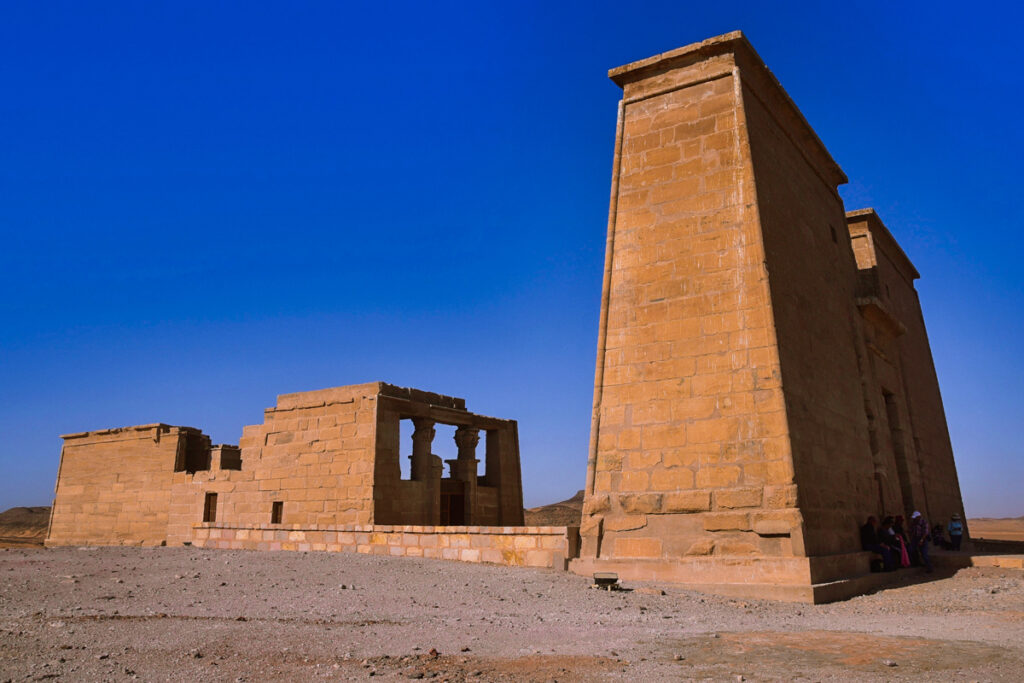
People think the Temple of Wadi es-Sebua is the largest of the southern temples, and it is also one of the temples that most people in Aswan don’t know about or care about. The Temple of Wadi es-Sebua is essential to history because of the Pharaonic state at the time, especially during the reign of King Ramses II.
The Temple of Wadi es-Sebua is 220 kilometers south of Aswan. It was built by Prince Setaw, who was the ruler of Nubia. It is a sign of the growing power of Egypt, the state in the south, and the death of its enemies. The Temple of Wadi es-Sebua is the second-largest Nuba temple after Abu Simbel. Abu Simbel is on the World Heritage List, which the United Nations Organization keeps for Science and Culture. On Lake Nasser, he has his ancient pharaonic name: “Ramses Beloved Amun in the town of Amun.” Seto gave him to Amon-Ra, Ra-Hor, Ptah, and King Ramses II. On Lake Nasser, he has his old name from when he was a pharaoh
The best way to learn about the ancient Egyptian culture that thrived along the banks of the Nile is to take the Nile Cruises. So Don’t miss booking our Best Nile River Cruises 2023
Description of Temple of Wadi es-Sebua
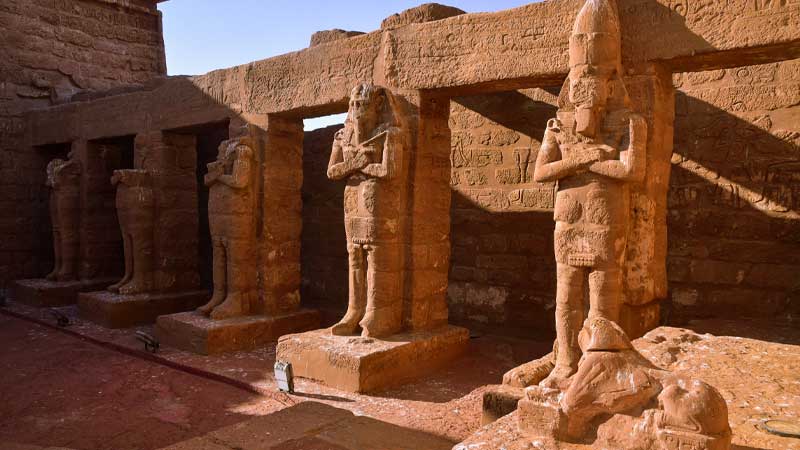
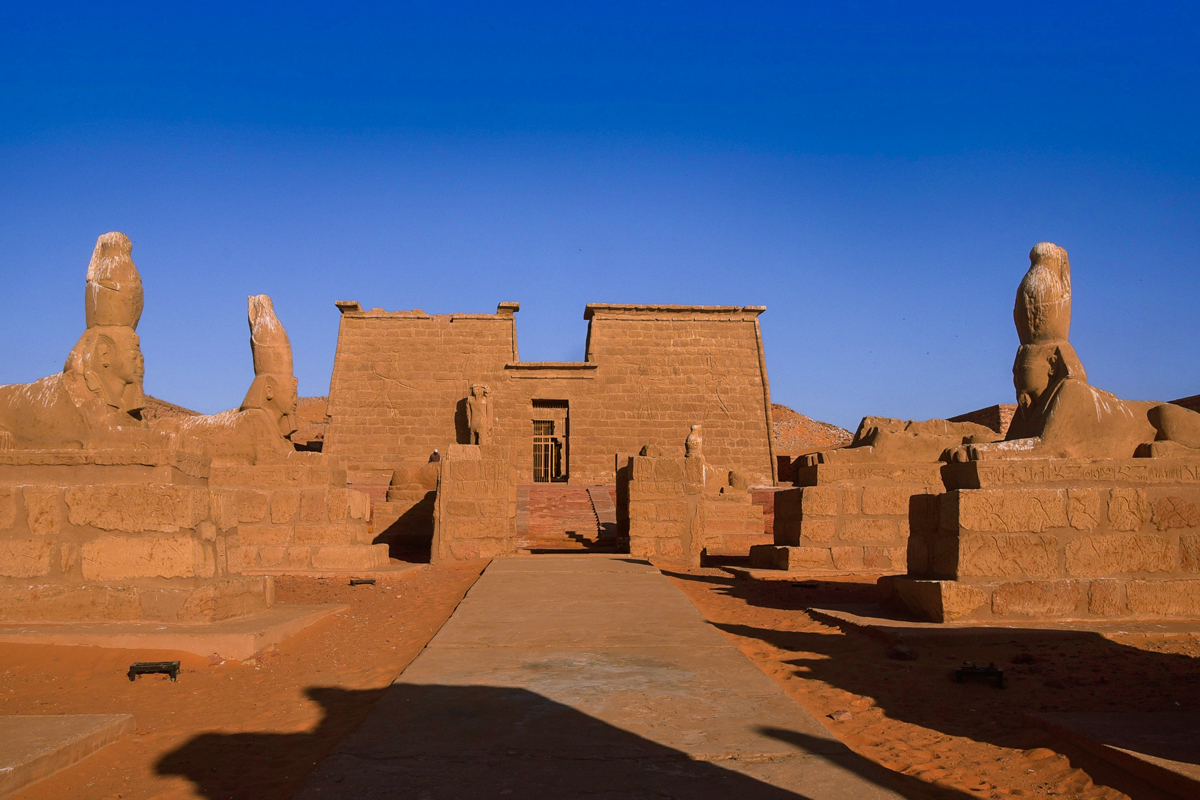
Eleven paintings used to be in front of the walls and to the south of the temple, but they have since been moved to the Egyptian Museum in Cairo, where they are now on display. The name “Wadi es-Sebua” comes from the two rows of Sphinx statues that stand in front of the temple and guard it.
Exaggeratedly, the face’s fullness and the feet’ size are examples of Nubian art from this period that can be seen in these statues. They are also made out of red sandstones typical in the Nubian region, which sets them apart from other temples along the Nile River.
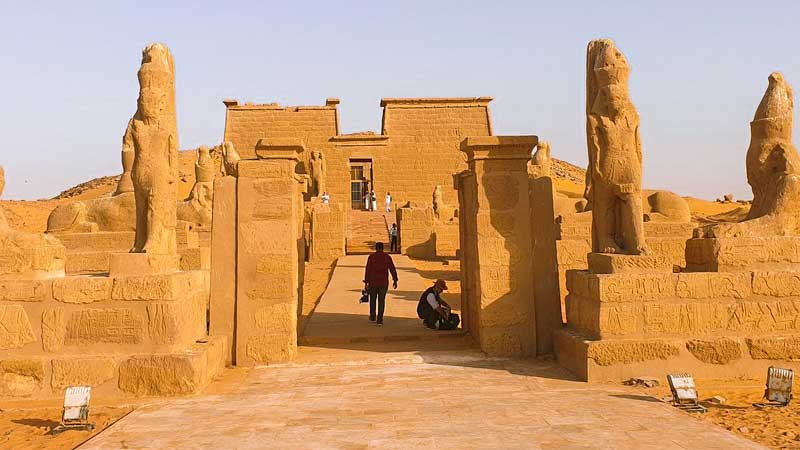
The first courtyard in the Temple of Wadi es-Sebua has six sculptures of sphinxes with human heads on double crowns. Behind each of them is a basin for washing. The first one was moved, and now the visitor is in the second one.
The second building then leads to a second courtyard with four statues of the Sphinx with falcon heads. These statues represent the god Horus as the owner of Kuban and Miam on the left side and Horus as the owner of Kuban and Horus the Advoy on the right side. The second courtyard’s southwest corner is a niche for the god Amun Ra and a storage room when you reach the yard’s far end.
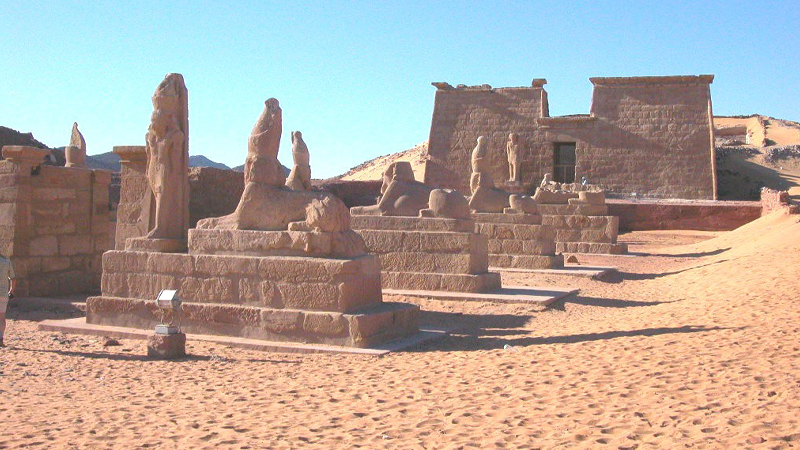
A staircase leads to a balcony that once held four statues of King Ramses II, but only one still stands. On the left, there is a statue of the daughter of Anat and 30 meters to the north of the temple, there is a similar statue.
Next to that statue is another staircase leading to a balcony that once held four statues of King Ramses II, but only one still stands. This second courtyard, the third building, is made of stone. On the left is a statue of King Ramses II beating captives in front of the god Amun Ra, and on the right is a statue of Ra Hor. The third courtyard is next, with two rows of columns, each held up by five (Osiris) columns. Most of them, though, are missing their heads. In the middle of the courtyard is a set of stairs leading to another row of statues, followed by the front of the temple.
There is a part that is carved into the rock. It is a hall with 21 square columns. Six columns are just columns, while the other is preceded by Osiris swaying. The Christians were allowed to build a church gate at the column hall’s entrance, followed by a transverse hall.
He also said that after this space is the rock-carved part, a hall for columns with two side rooms. The temple ends here with the Holy of Holies, where there are pictures of Ramses in front of the sacred boat of each of (Amun-Ra, Ra, Hur Akhti, and King Ramses, and his image on both sides of the cavity, presenting flowers, as there is a view of the sun boat while at the top of the hole.
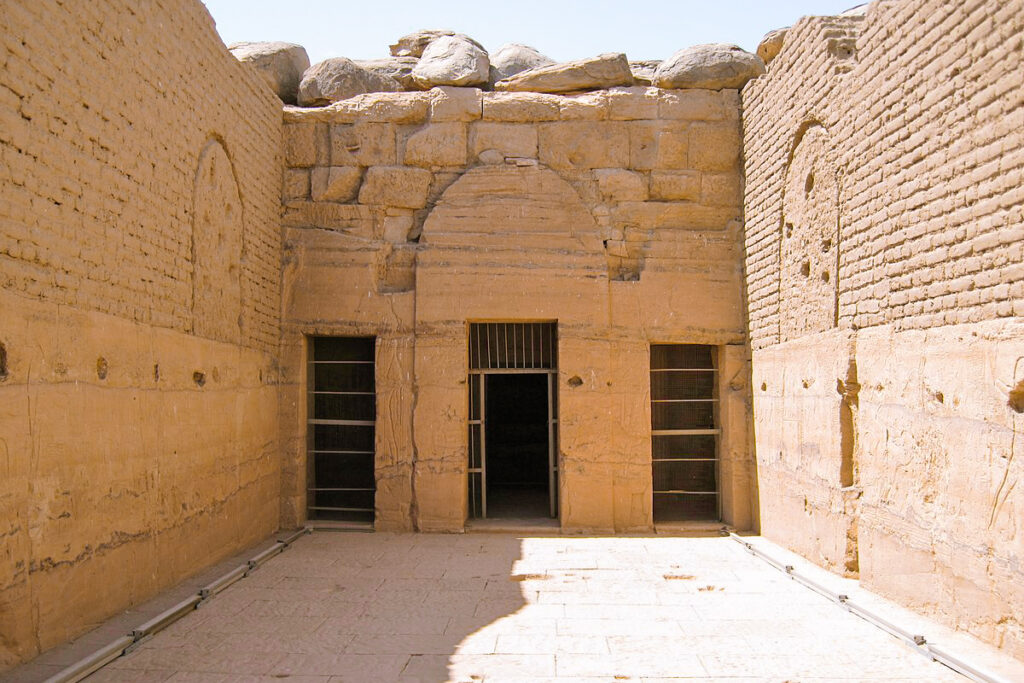
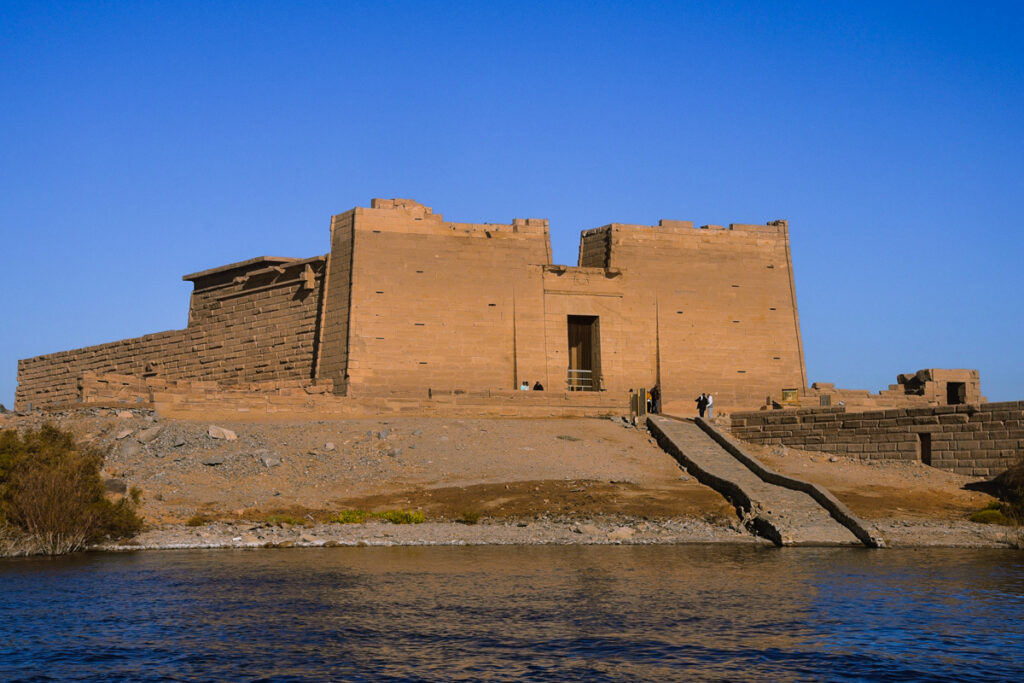
Three shrines near the Al-Seboua temple were moved from Qasr Ibrim. Efforts are being made to put them back in place from the side of antiquities near the temple. He said that the shrines in Qasr Ibrim had been moved. Prince (Nahya), who was the ruler of Nubia during the time of King Tuthmosis III, and Prince Setaw, who was the ruler of Nubia during the time of King Ramses II, were given the job of building the first two cabins. During Queen Hatshepsut’s time in power, the third cabin was built.
Check Our Top Nile Cruise Trips:-
- Standard Nile Cruise
- Deluxe Nile Cruises
- Luxury Nile Cruises
- Ultra Luxury Nile Cruises
- Lake Nasser Cruise Ships
- Dahabiya Nile Cruise