
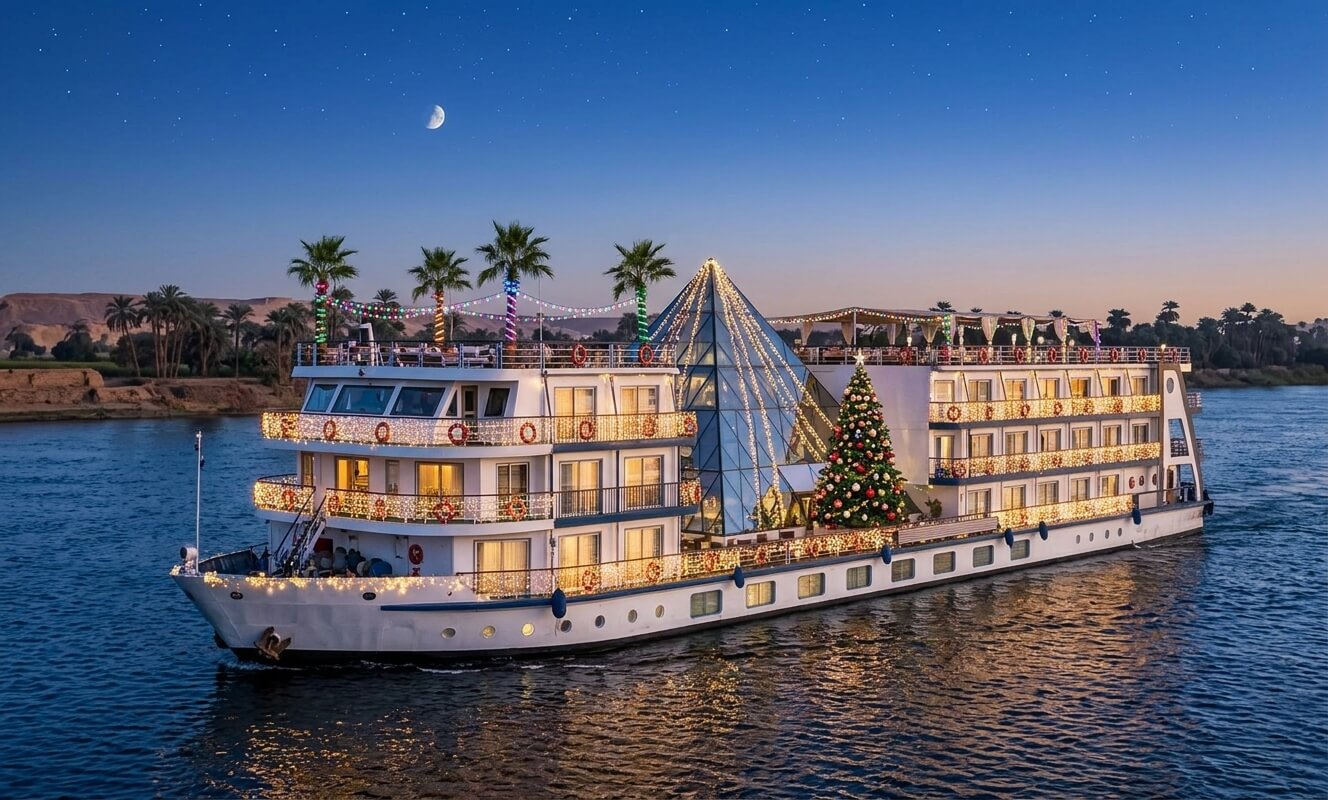
Christmas in Egypt is unlike anywhere else. The country celebrates twice a year, and the season stretches well beyond December 25th. While most of the world settles back into routine after New Year’s Day, Egyptian Christians are preparing for their second Christmas on January 7th. At Nile Cruise Trips, we think this double celebration is one of the most interesting reasons to plan a winter trip along the Nile, because Christmas in Egypt gives you two very different moods in one season.
Ready to plan your holiday? Explore our Christmas trips on the Nile and pick the dates that suit you.
Why Christmas in Egypt Happens Twice
The two dates come from the difference between the Julian and Gregorian calendars. The world originally followed the Julian calendar, established by Julius Caesar. Over time it drifted slightly out of step with the solar year. To correct that drift, Pope Gregory XIII introduced the Gregorian calendar in 1582, and it is the calendar most of the world uses today.
The Julian calendar now runs about 13 days behind the Gregorian one. That means December 25th on the Julian calendar lines up with January 7th on the Gregorian calendar. This is why Orthodox Christians, including Egypt’s Coptic Christmas community, celebrate Christmas in Egypt on that later date.
Coptic Christmas in Egypt: Faith First
Most Egyptian Christians belong to the Coptic Orthodox Church, which follows the Julian calendar and observes Coptic Christmas on January 7th. For them, Christmas is the culmination of weeks of spiritual preparation. The focus is less on material celebration and more on faith, reflection, and time with family.
The 43-Day Holy Nativity Fast
The Holy Nativity Fast begins on November 25th and lasts 43 days. During this period, Copts abstain from all animal products, so many follow a vegan diet. The fast is a time for prayer, self-control, and spiritual renewal, helping worshippers focus on gratitude and faith before the birth of Christ.
The Sacred Midnight Mass
The highlight of Coptic Christmas is the midnight liturgy on January 6th. The solemn service begins late in the evening and continues past midnight. Churches glow with candlelight, fill with incense, and echo with traditional hymns. Worshippers take Communion and share qurban, a special bread that symbolizes unity and blessing. For many, it is one of the most meaningful nights in the entire Coptic calendar, and it is a moment many visitors to Christmas in Egypt remember most.
Breaking the Fast with a Feast
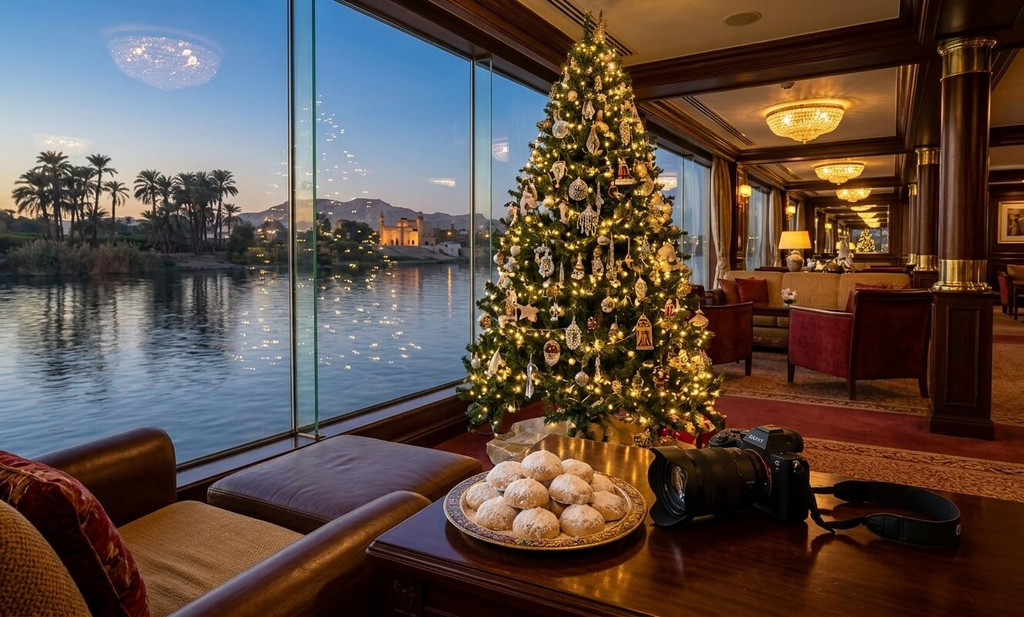
After the midnight service, families gather for a feast they have been looking forward to for weeks. The star dish is fatta, a layered combination of toasted bread, rice, and meat, often lamb or beef, topped with a garlic and vinegar sauce. Other popular dishes include roasted duck, macarona bechamel, and stuffed vegetables (mahshi). For dessert, families enjoy kahk, Egypt’s beloved shortbread cookies dusted with powdered sugar. The meal marks the end of fasting and the start of festive joy.
Want to be on the water for the holiday? See our Christmas Nile cruise options and choose the sailing that works for your plans.
Christmas in Egypt on December 25th: The Festive Side
While January 7th is the official Coptic Christmas, December 25th has become a significant festive occasion in Egypt, especially in Cairo and Alexandria and other tourist areas. Catholic, Protestant, and Greek Orthodox communities follow the Gregorian calendar and hold church services, family gatherings, and festive dinners much like those in the West.
From mid-December onward, Cairo and Alexandria light up with festive displays. Streets, hotels, and shopping malls sparkle with Christmas lights, decorated trees, and ornaments. Palm trees wrapped in colorful lights give the celebrations a uniquely Egyptian charm. Upscale neighborhoods host Christmas markets where locals and visitors can enjoy seasonal food, handmade crafts, and cheerful music.
Baba Noël: Egypt’s Santa Claus
Baba Noël, Egypt’s version of Santa Claus, is a beloved figure during the December celebrations. Children eagerly await his arrival and often leave out kahk cookies in hopes of receiving gifts. Western-style gift-giving is becoming more popular, but many families keep the Egyptian tradition of giving money, especially to children, as a token of love and blessing. Elders often hand children small amounts of money, known as “Adea,” on Christmas Eve. It is a simple custom that still brings a lot of excitement to the season.
Kahk, Qatayef, and Other Festive Treats
Kahk el Eid, the crumbly cookies often filled with nuts or dates, is the most iconic Egyptian holiday treat. These sweets have roots in ancient Egypt and are enjoyed across religious holidays as a symbol of unity and shared culture. Families also prepare qatayef, sweet stuffed pancakes, and other homemade desserts, often exchanging them as gifts when they visit each other.
How Christmas in Egypt Brings Communities Together
One of the most beautiful parts of Christmas in Egypt is the spirit of respect between faiths. During the season, Muslim Egyptians often extend greetings to their Christian neighbors and sometimes help with church celebrations. In moments of tension, Muslims have stood outside churches as human shields to protect their Christian neighbors, a powerful symbol of national unity.
Since 2002, Egypt has recognized January 7th as an official public holiday. This national acknowledgment reflects the country’s commitment to religious diversity and mutual respect. Many families with mixed backgrounds celebrate both dates, blending spiritual and modern customs. The result is a festive season that goes beyond religious lines and becomes a shared national celebration.
Frequently Asked Questions About Christmas in Egypt
Why does Christmas in Egypt happen twice?
The two celebrations come from the difference between the Julian and Gregorian calendars. The Coptic Orthodox Church keeps the Julian date, which falls on January 7th on the modern calendar, while Western churches celebrate on December 25th.
What is the purpose of the 43-day fast before Coptic Christmas?
The Holy Nativity Fast is a period of prayer, self-discipline, and reflection before Christmas. Copts avoid animal products during this time, and the fast ends with the festive meal after the midnight service.
How do Egyptians celebrate Christmas on December 25th?
Many Egyptians, especially Catholics, Protestants, and families with mixed backgrounds, mark December 25th with church services, gift exchanges, and festive dinners. Cities and tourist areas are decorated with lights and trees, and some hold Christmas markets.
What traditional foods are served at Christmas in Egypt?
Fatta is the centerpiece dish served after the midnight Coptic service. Roast duck, macarona bechamel, stuffed vegetables, and kahk cookies are also common on the table.
Why is Egyptian Christmas on January 7th?
The Coptic Orthodox Church follows the Julian calendar, which currently runs about 13 days behind the Gregorian calendar. So the date that was December 25th on the older calendar falls on January 7th on the modern one.
Is Egypt a good place to visit for Christmas in Egypt?
Yes, especially for travelers who enjoy culture and history. The winter weather is mild, the festive season is lively in the cities, and the Coptic celebrations offer a rare chance to see a deeply traditional side of the country. Visitors should keep in mind that January 7th is a public holiday, so some services and businesses may follow a different schedule that day.
Practical Tips for Visitors Planning Christmas in Egypt
- Plan around both dates. If you want to see the Coptic celebrations, aim to be in Egypt around January 6th and 7th. If you prefer the decorations and city atmosphere, mid-to-late December is a great window.
- Dress modestly for churches. Cover shoulders and knees, and be respectful during services, especially during the midnight liturgy.
- Ask before taking photos. Churches and worshippers may have their own rules about photography, so check first.
- Book early for the holiday period. Popular cruises and hotels fill up quickly during the winter holidays.
- Keep the Nile in your plans. Luxor and Aswan are excellent places to combine temples and history with the calm of a river cruise during your Christmas in Egypt trip.
Plan Your Christmas in Egypt Nile Cruise
Winter is one of the most comfortable times to sail the Nile. The weather is mild, the temples of Luxor and Aswan are pleasant to explore in cooler air, and the holiday season adds an extra sense of occasion to every port. Whether you want to celebrate Coptic Christmas on January 7th or enjoy the December festivities in Cairo and Alexandria, Nile Cruise Trips can help you build a Christmas in Egypt trip around the dates that matter most to you.
Book your Christmas trip. Browse our Christmas in Egypt packages or get in touch with our local experts to plan a custom Nile cruise for your holiday season.
